
Building the capability to manage cryptographic change with confidence
Digital trust depends on cryptography. It protects identities, secures communications, enables transactions and underpins the applications, cloud services and infrastructure organisations rely on every day.
Yet cryptography has often accumulated over decades with limited visibility, fragmented ownership and no consistent way to govern change. As technology, regulation and threats evolve, that creates risk—and makes even necessary change difficult to deliver safely.
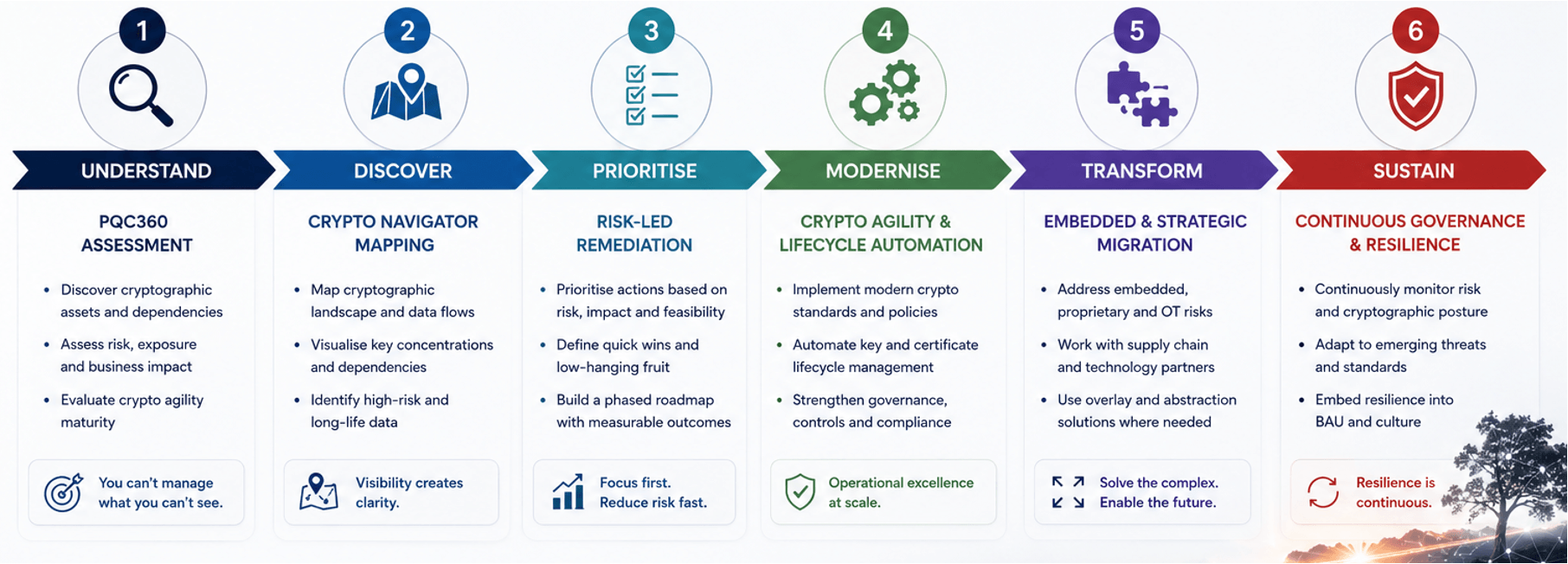
Burning Tree helps organisations build cryptographic resilience: the governance, insight, operating model and technical capability needed to understand cryptographic risk, respond to change and maintain trust. Our consulting-led approach develops crypto agility, while CipherWyze Navigator turns discovery into governed action.
The challenge is not simply implementing cryptography.
It is managing cryptographic change.
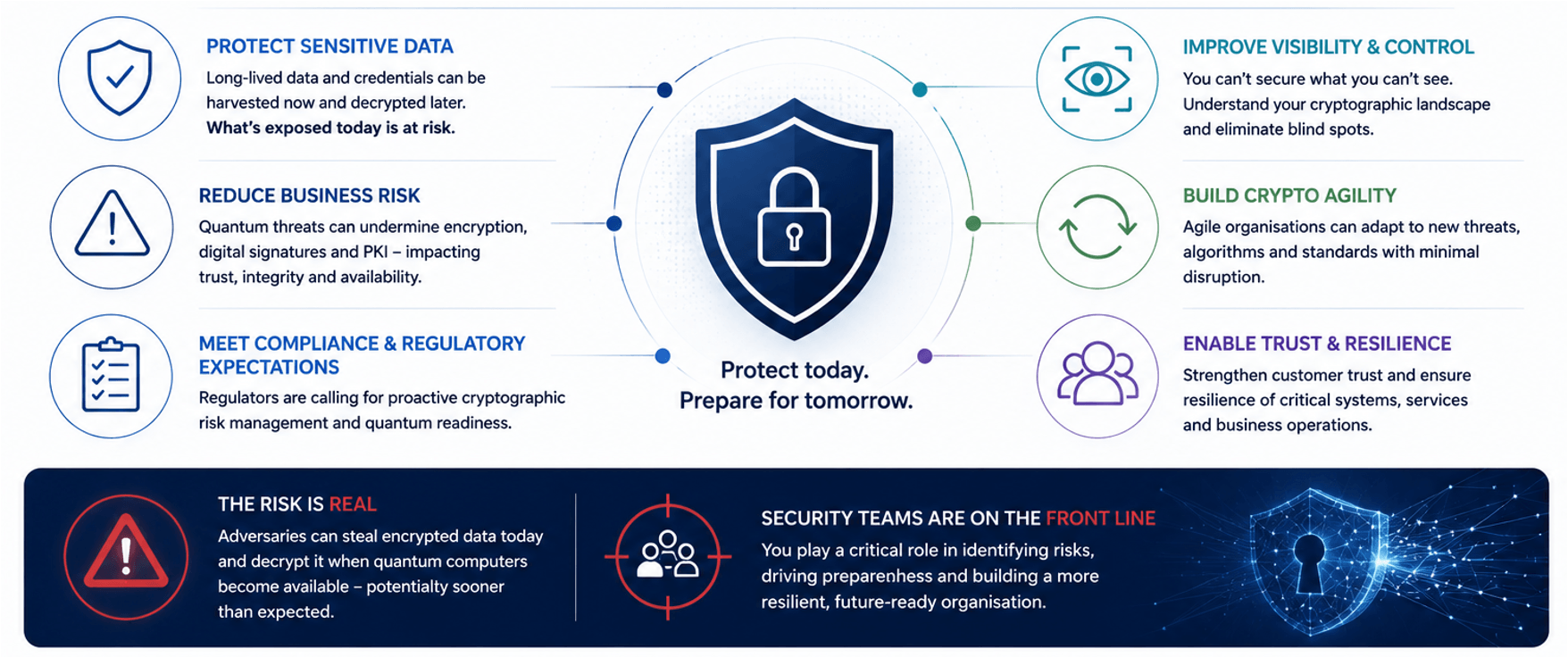
Why Cryptographic Resilience Matters
Cryptography is woven into almost every digital service. It verifies people and machines, protects data, authenticates software, secures connections and enables customers and partners to transact with confidence.
Organisations do not usually manage cryptography as a single enterprise capability. They manage applications, identities, networks, devices, cloud platforms and suppliers. Cryptographic assets and dependencies have quietly accumulated beneath them—often without common ownership, consistent standards or a complete view of business impact.
That hidden dependency becomes visible when change is required. An expiring certificate can interrupt a service. A vulnerable library can affect many products. A supplier decision can constrain a migration. A change in standards can create thousands of remediation tasks across teams that were never designed to work as one programme.
Cryptographic resilience connects technology to trust
- Identity — authenticating people, workloads, devices and services.
- Communications — protecting data moving across internal and external networks.
- Applications and cloud — securing APIs, workloads, secrets and service-to-service connections.
- Software integrity — signing code, updates, containers and trusted components.
- Transactions — preserving confidentiality, integrity and non-repudiation.
- Customer trust — demonstrating that digital services remain secure and dependable.
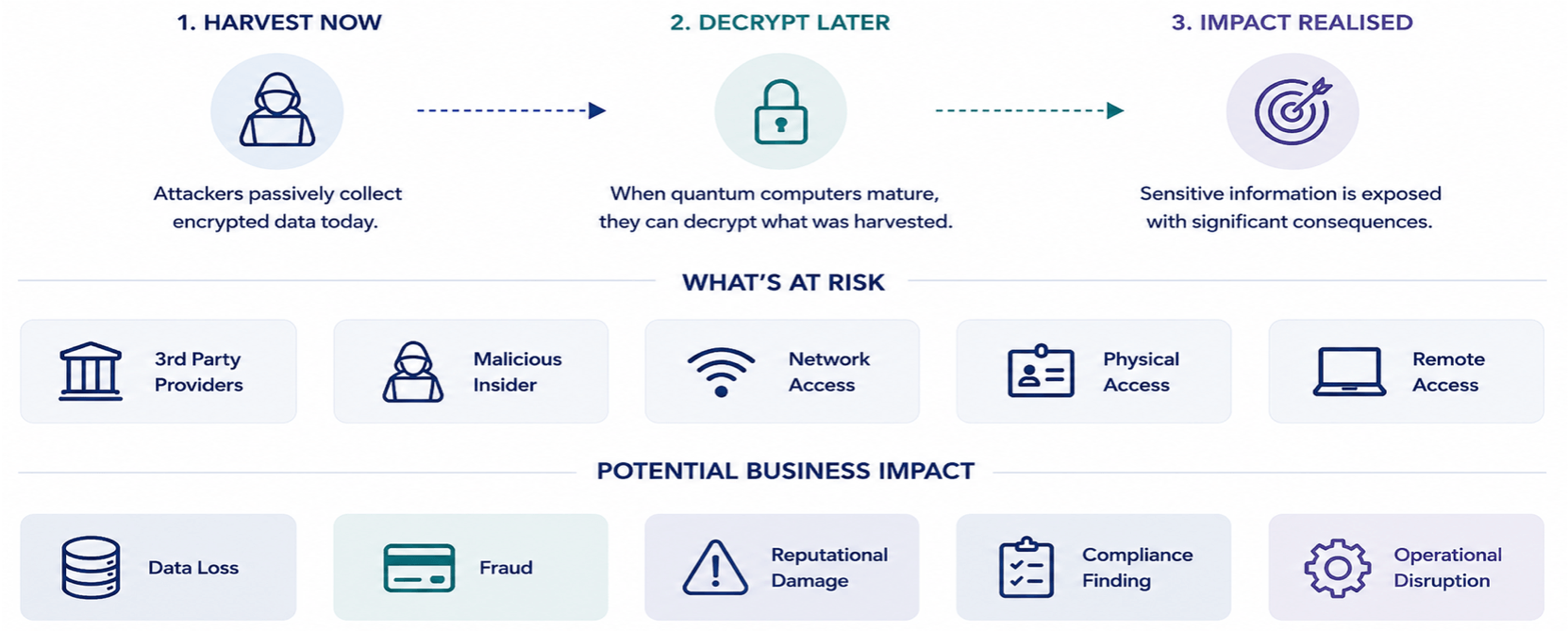
Cryptographic resilience gives organisations the capability to understand these dependencies, make informed decisions and adapt without losing control of risk, service continuity or evidence.
Quantum Computing: The Compelling Event
Quantum computing has brought cryptographic change into the boardroom. A sufficiently capable quantum computer could undermine widely used public-key algorithms, and the transition to post-quantum cryptography will affect technology estates, products, suppliers and long-lived data.
The exact timeline remains uncertain. The need to prepare does not. Governments, regulators and standards bodies are already acting. The UK’s National Cyber Security Centre (NCSC) recommends that organisations begin preparing now, while NIST has standardised the first post-quantum cryptographic algorithms and published migration guidance. Across Europe, ENISA continues to promote cryptographic inventory, governance and crypto agility, and the White House has directed US federal agencies to identify cryptographic dependencies and develop migration plans. Together, these initiatives demonstrate that preparation has already moved from research into operational planning.
More importantly, quantum computing has exposed a governance problem that already existed. Many organisations cannot confidently answer:
- Where is cryptography used?
- Which business services depend upon it?
- Who owns the associated risk?
- Which suppliers and third parties are involved?
- How would cryptographic change be prioritised, governed and evidenced?
These are not simply post-quantum questions. They are questions of cryptographic resilience.
Quantum computing is the catalyst. Cryptographic resilience is the capability.
Preparing well means doing more than replacing algorithms. It means creating the visibility, ownership, decision-making and delivery capability to manage this transition—and the cryptographic changes that will follow it.
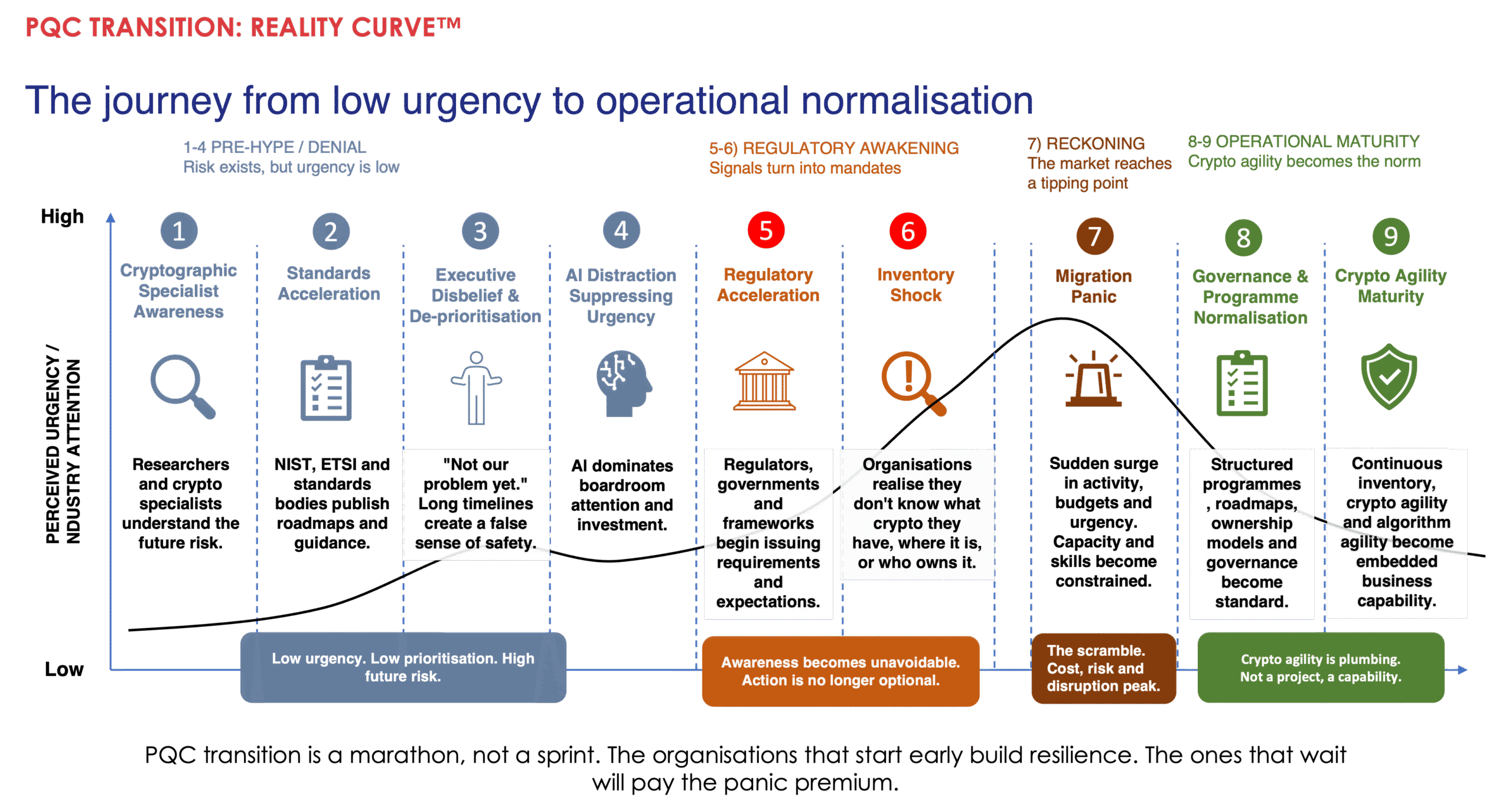
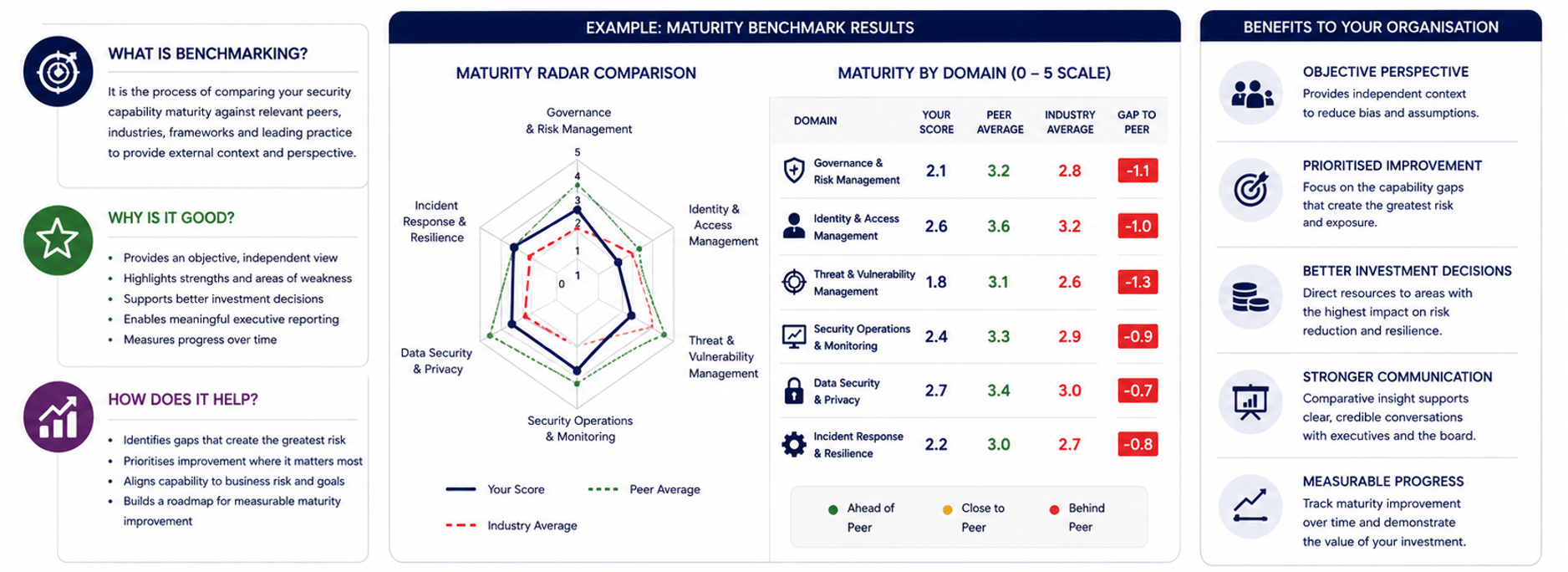
Innovation Through Collaboration
One of the recurring challenges we encountered while helping organisations prepare for cryptographic transformation was that discovery alone was never enough.
Many organisations were beginning to identify certificates, algorithms and cryptographic dependencies, yet they still lacked the governance needed to prioritise remediation, coordinate stakeholders and manage enterprise-wide change.
Recognising that this challenge required more than consulting alone, the founders of Burning Tree and Wyzetree came together to establish CipherWyze—a new independent software company dedicated to helping organisations govern cryptographic resilience.
Each organisation remains focused on what it does best.
Burning Tree provides independent advisory, assessment and transformation services.
Wyzetree brings decades of experience in cryptographic technology and product engineering.
CipherWyze develops the governance platform that enables organisations to manage cryptographic transformation at scale.
Together, this collaboration combines strategic advisory with purpose-built technology, helping organisations move from cryptographic discovery to governed, measurable action.
Learn more about CipherWyze →
Accelerated by CipherWyze?
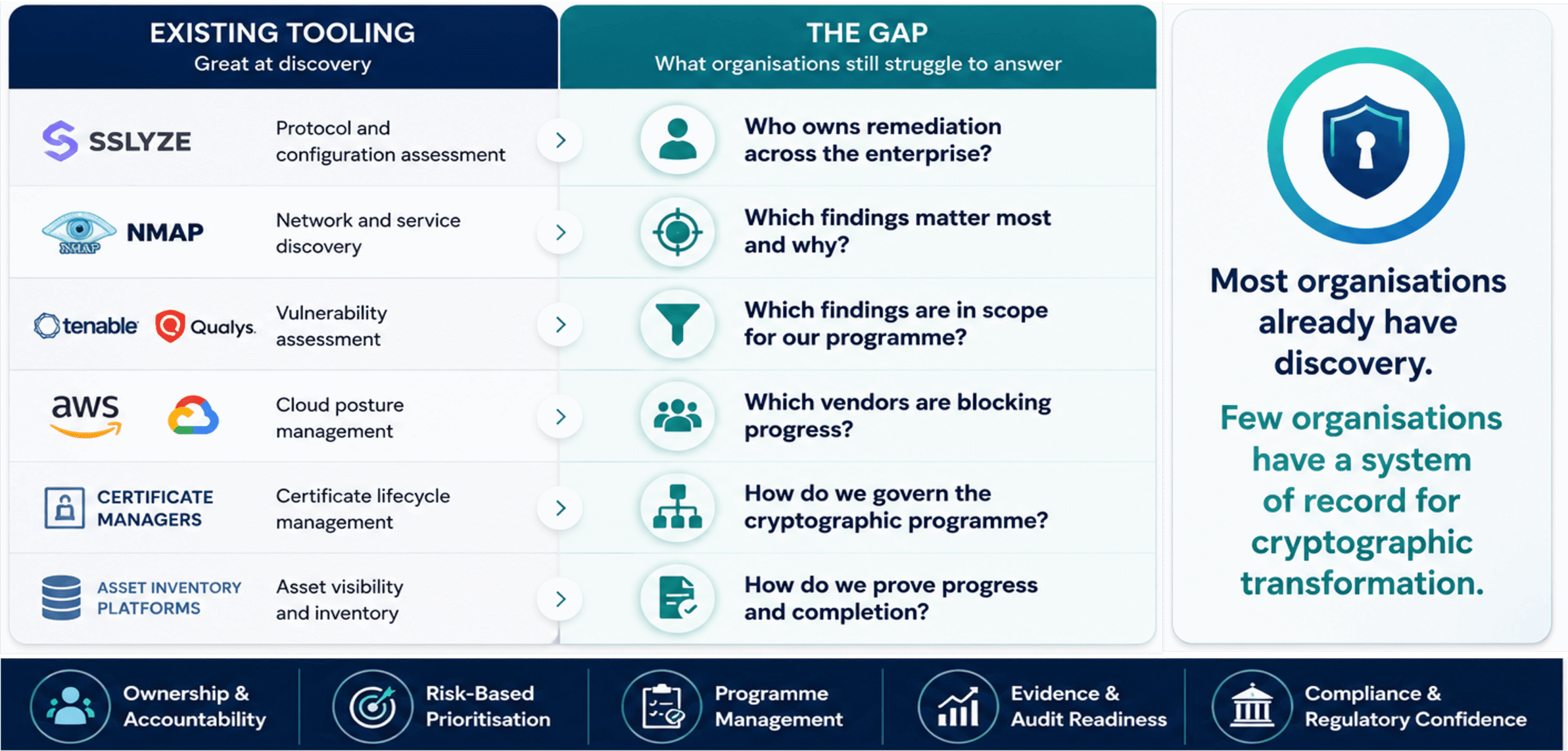
Discovery is not enough. Discovery tools can reveal certificates, algorithms, keys, libraries and cryptographic dependencies. That visibility is essential—but it does not decide what matters most, establish ownership or deliver remediation.
Without a governance layer, organisations can be left with thousands of findings spread across spreadsheets and disconnected tools. Business context is incomplete. Accountability is unclear. Exceptions are difficult to control. Progress is hard to evidence. The programme becomes a reporting exercise rather than a mechanism for reducing risk.
CipherWyze Navigator is the operational platform Burning Tree uses to bridge that gap. It brings discovery data, business context, ownership, decisions and transformation activity into a governed system of record.
CipherWyze turns cryptographic discovery into governed action.
Navigator helps organisations
- Create a trusted, contextual view of cryptographic assets, dependencies and exposure.
- Assign ownership and accountability across applications, services, risks and remediation actions.
- Prioritise work using business impact, technical risk, data sensitivity and delivery constraints.
- Manage roadmaps, actions, dependencies, exceptions and supplier engagement as one programme.
- Provide executive reporting, audit-ready evidence and traceability from finding to outcome.
Turning Discovery into Governed Action
Navigator gives a cryptographic resilience programme a clear operational rhythm. Findings enter from discovery tools, assessments and stakeholder engagement.
They are normalised, enriched with business context and connected to accountable owners. The organisation can then make risk-based decisions, coordinate action and retain the evidence behind every outcome.
A governed path from finding to outcome
- Consolidate – Bring relevant cryptographic findings and supporting data into a consistent view.
- Contextualise – Connect assets to applications, business services, data, suppliers and organisational owners.
- Prioritise – Evaluate exposure and business impact to determine what requires action first.
- Mobilise – Create workstreams, assign actions, manage dependencies and engage the right teams and vendors.
- Govern – Track decisions, exceptions, risk acceptance, milestones and programme health through a consistent operating model.
- Evidence – Maintain traceability from discovery through remediation and report measurable progress to executives, risk teams and auditors.
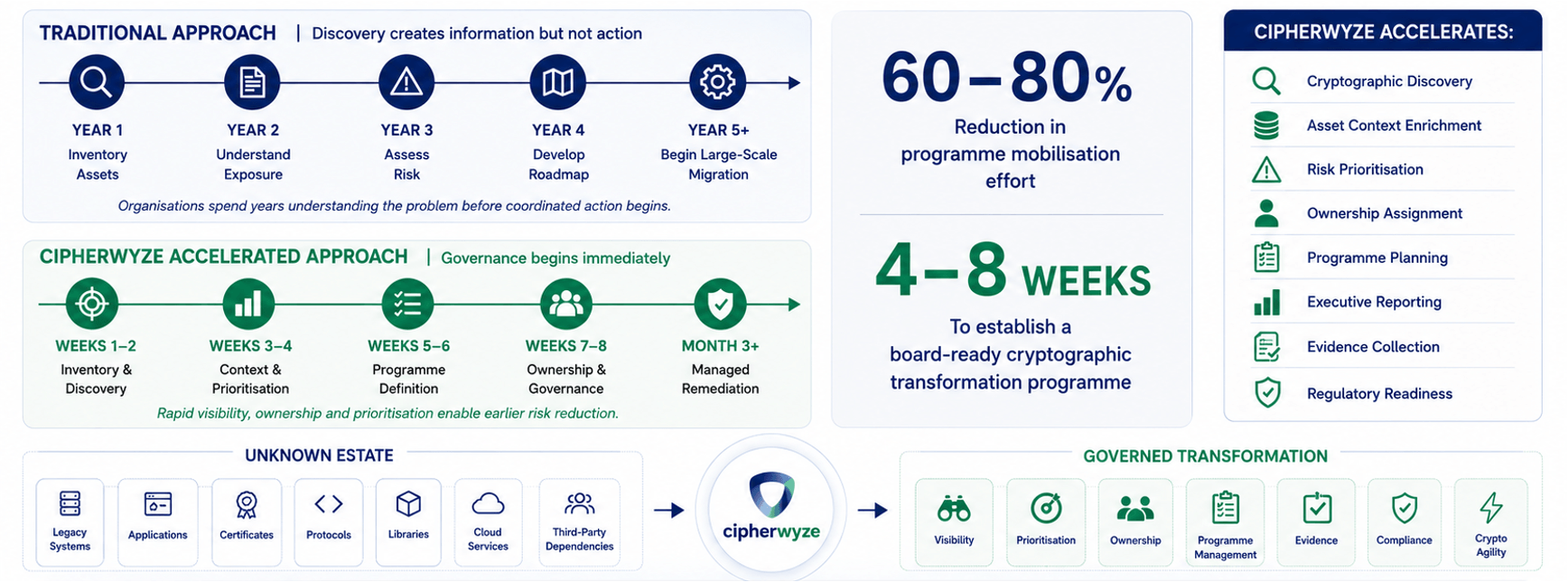
This approach supports post-quantum readiness, cryptographic modernisation, certificate and key-management improvement, policy compliance and future changes in algorithms, protocols or regulation.
Explore more on Post-Quantum Security through insights from our experts, including blogs, articles, and in-depth research—helping you stay ahead of emerging cryptographic risks and evolving industry guidance.