
Innovate with confidence
Artificial intelligence is changing how organisations operate, make decisions and create value. It can improve productivity, strengthen insight and enhance security. It can also amplify weaknesses in identity, data, governance, business processes and third-party relationships.
Burning Tree helps organisations adopt AI securely by creating the governance, control environment and operating practices needed to innovate with confidence.
The objective is not to slow AI adoption. It is to make AI adoption sustainable.
AI Changes the Business & Control Environment
AI is not simply another application to secure. It is becoming part of the way work is performed.
It can support decisions, automate activity, analyse large volumes of information, identify anomalies, predict risk and adapt workflows.
It can be ebedded across procurement, finance, customer service, human resources, software development, security operations and wider operational delivery.
That opportunity changes the control environment.
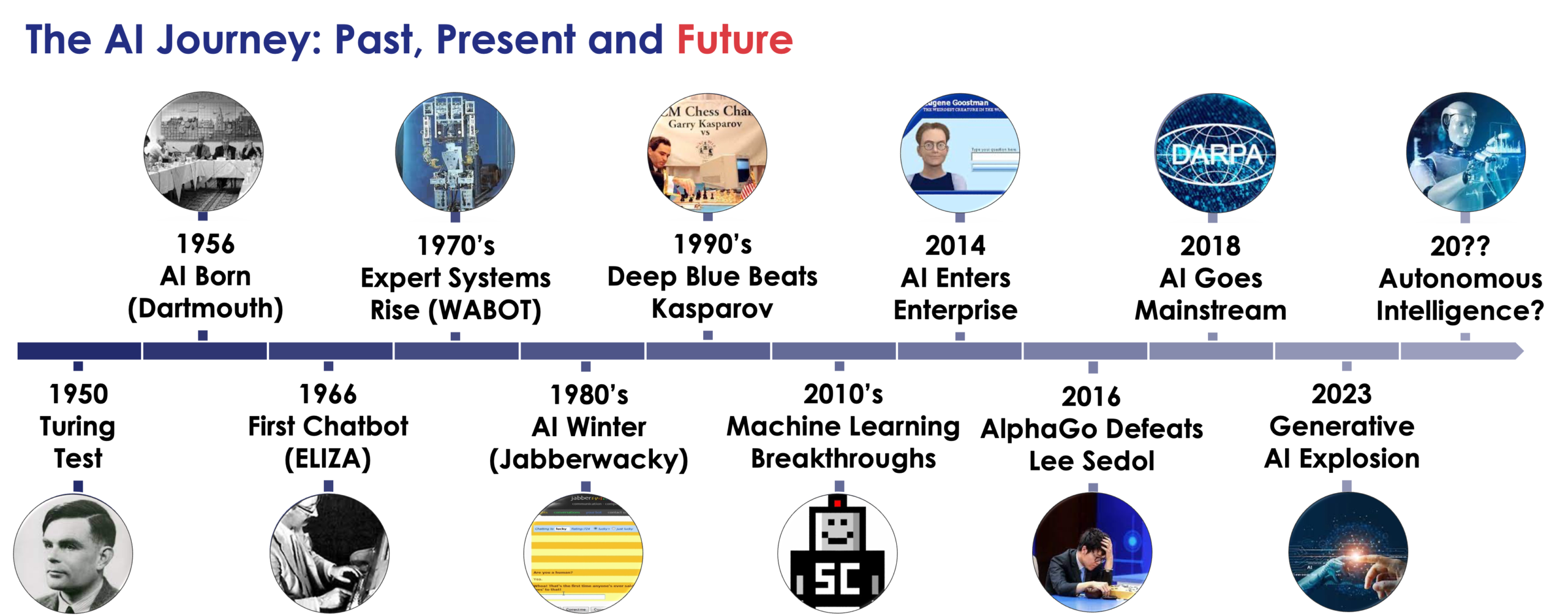
AI systems may:
- access sensitive corporate, personal or regulated information;
- make, recommend or influence business decisions;
- act across multiple systems, applications and data sources;
- interact directly with employees, customers, suppliers and partners;
- introduce new models, platforms and third-party dependencies; and
- operate at a speed and scale that conventional human oversight was not designed to match.
As AI becomes embedded in business processes, existing control assumptions must be revisited. Accountability, authority, data access, segregation of duties, oversight and assurance still matter—but they need to work in an environment where people, applications, models and autonomous agents increasingly act together.
Secure AI adoption is a business governance challenge, an identity challenge, a data challenge and a security challenge—not only a technology programme.
AI Amplifies What Already Exists
AI does not remove the fundamentals of cybersecurity. It increases their importance.
Weak identity can become greater exposure. Poorly governed data can be accessed, combined or disclosed at greater speed. Excessive privilege becomes more powerful when exercised by automation. Gaps in business processes become easier to exploit. Unclear ownership makes accountable decisions harder.
The same principle works in the other direction. Strong governance gives innovation a clear mandate. Well-managed identities create dependable boundaries.
High-quality, appropriately protected data improves outcomes.
Good monitoring makes unusual behaviour easier to identify. Resilient processes reduce the impact of failure.
AI amplifies both weakness and strength. The condition of the organisation it enters will shape the risk—and the value—it creates.
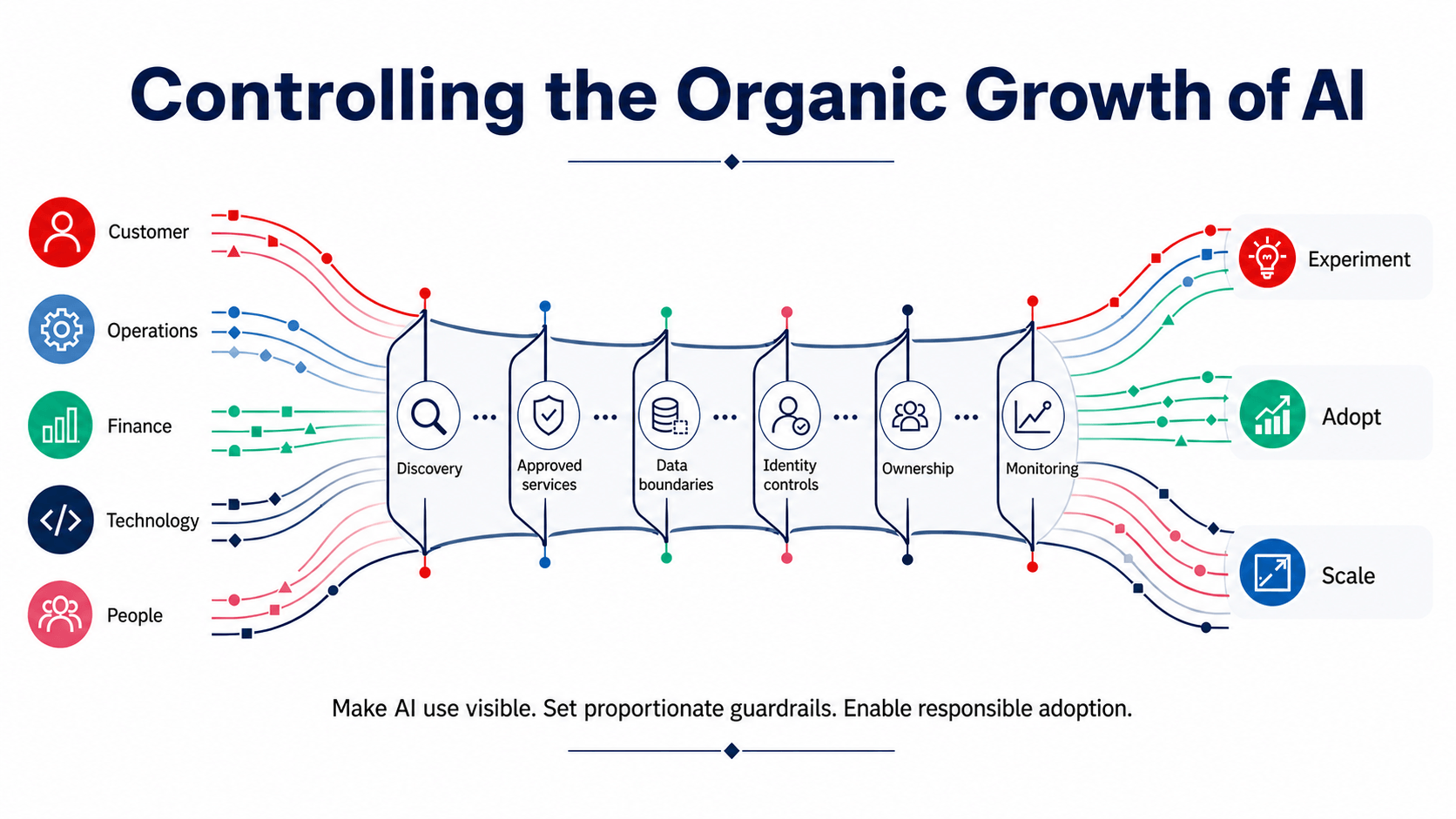
This is why secure adoption should begin with an honest understanding of the current environment. Organisations need visibility of where AI is already being used, which data it touches, the identities and privileges involved, the decisions it influences and the suppliers on which it depends.
Identity at the Centre of Secure AI
Identity at the Centre of Secure AI
AI introduces new identities, new privileges and new trust relationships.
AI systems increasingly act on behalf of people, applications and business processes. Agents may request information, invoke tools, initiate transactions or influence decisions.
Each action raises familiar—but newly urgent—questions:
- Who, or what, is making the request?
- On whose authority is it acting?
- What information and systems should it be allowed to access?
- Which actions may it perform, and within what limits?
- How is privilege granted, reviewed and revoked?
- Where is human approval required?
- How will abnormal or inappropriate behaviour be detected?
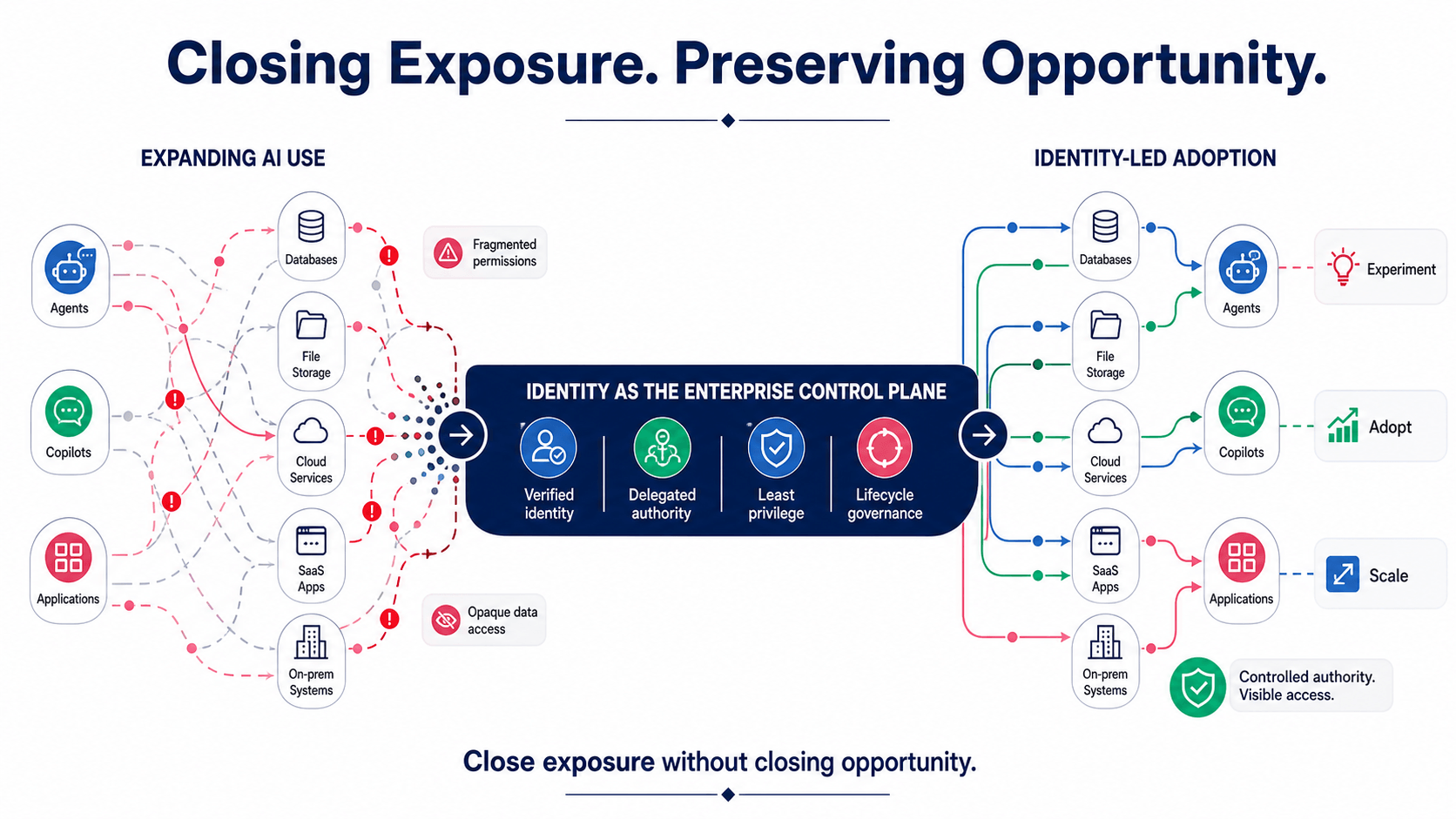
In an AI-shaped enterprise, identity becomes part of the control plane. It connects authority to action and provides the basis for least privilege, separation of duties, traceability and intervention.
Burning Tree brings deep Identity & Access Management experience to this challenge. We help organisations extend established identity principles into AI environments: strong authentication, managed machine and workload identities, lifecycle governance, privileged access management, adaptive controls, behavioural insight and appropriate human oversight.
AI will transform your business. Identity will determine whether it is controlled—or exposed.
The Secure AI Control Environment
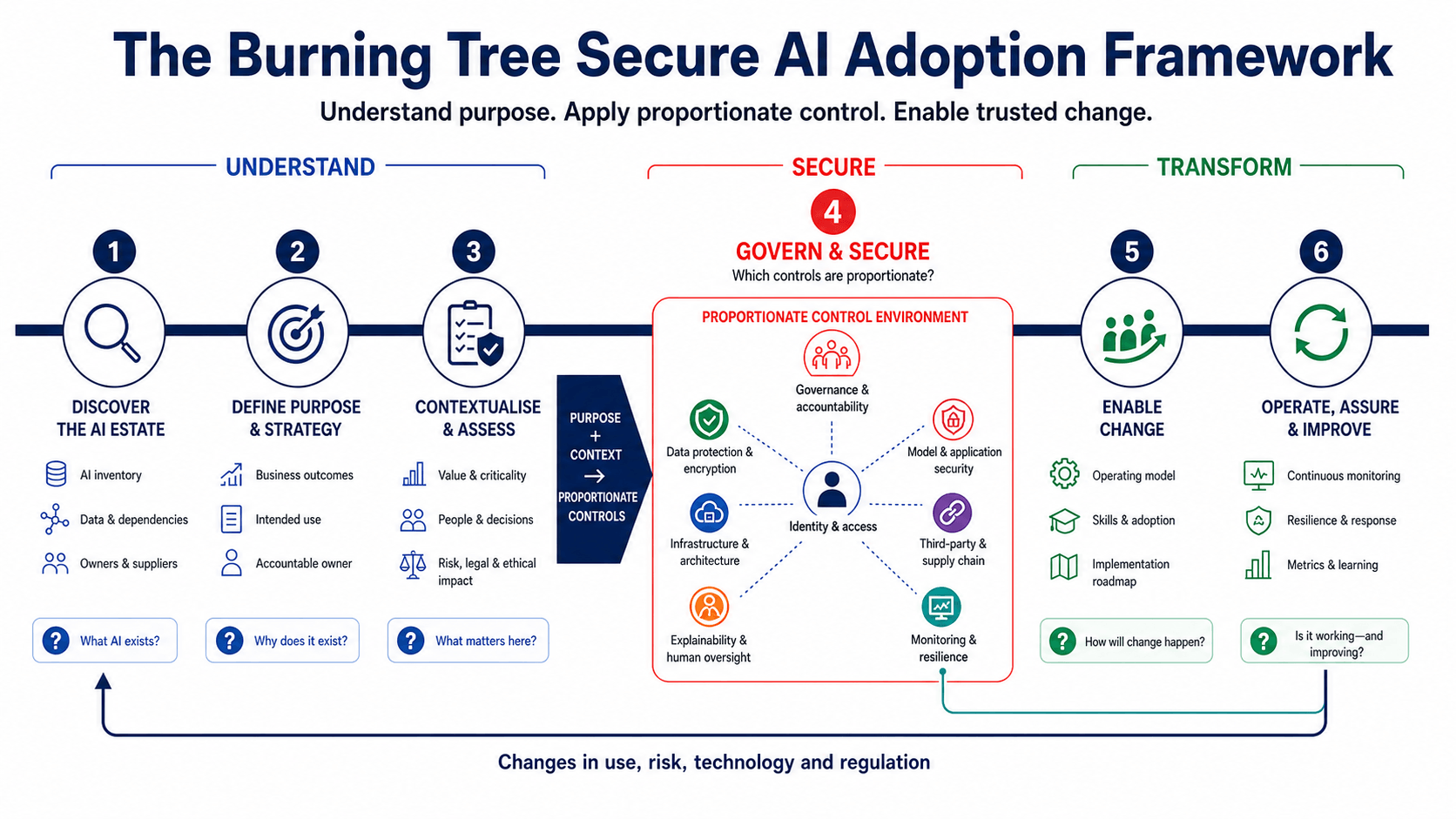
Secure adoption depends on a connected control environment. Individual controls matter, but their value comes from working together across the full AI lifecycle and the business processes AI supports.
Burning Tree structures that environment around seven mutually reinforcing areas.
Governance provides direction. Identity connects authority to action. Data controls protect what AI consumes and creates. Secure models, applications and infrastructure reduce technical exposure. Supply-chain controls extend assurance beyond the organisation. Monitoring and resilience show whether the environment continues to operate as intended.
Managing AI Risk Without Slowing Innovation
AI risk should not be managed by creating obstacles that people will work around. It should be managed by making safe choices easier, boundaries clearer and accountability visible.
A proportionate approach distinguishes between low-risk experimentation and use cases that affect sensitive data, important decisions, regulated activity or critical operations. It defines where teams can move independently, where specialist review is needed and where human decision-making must remain central.
Practical guardrails can include:
- an inventory of approved services and known use cases;
- clear data-handling rules and technical data boundaries;
- risk-based intake and approval routes;
- defined ownership for systems, models, data and business outcomes;
- secure architectural patterns and reusable control requirements;
- training that is specific to people’s roles and decisions; and
- monitoring that reveals changing usage, exposure and control effectiveness.
This creates confidence for innovators as well as leaders. Teams know what is acceptable, which capabilities they can use and when to ask for support. Leaders gain a clearer view of exposure, dependencies and responsibility.
Good governance is an enabler: it replaces ambiguity with decisions, pathways and proportionate guardrails.
Secure AI Adoption in Practice
Secure adoption becomes real at the point where AI meets a business process.
A procurement assistant may summarise bids, but its recommendations depend on the data it can access, the criteria it applies and the human accountable for supplier selection. A customer-service agent may respond more quickly, but it also needs reliable identity, privacy boundaries, accurate information and clear escalation routes. AI-supported access decisions may improve speed and context, but authority, explainability and separation of duties remain essential.
Burning Tree examines the complete process: the business objective, participants, data, decisions, systems, suppliers, controls and outcomes. This reveals how AI changes the process rather than treating the model as an isolated technical component.
Typical areas of application include:
- procurement, due diligence and supplier selection;
- financial reporting, anomaly identification and fraud detection;
- customer authentication, service and personalisation;
- employee onboarding, movement and offboarding;
- software development and assurance;
- security monitoring and incident response;
- identity governance and access decision-making; and
- operational planning and management insight.
For each use case, we help determine what must remain human, what can be automated, how decisions will be evidenced and which controls are needed to preserve trust.
The Burning Tree Approach
Our approach connects strategic intent to practical control through five stages.
Areas Where Burning Tree Can Help
Organisations are at different points in their AI journey. Some need an independent view of current exposure. Others need governance, secure architecture, identity controls or experienced support to turn policy into sustainable practice.
Intellectual Property and Data Risk
Generative AI creates questions that conventional security reviews can miss. Confidential information may be entered into external services. Source material may have uncertain provenance or licensing. Generated content may be inaccurate, derivative or unsuitable for its intended use. Prompts, outputs and interaction logs may themselves become sensitive records.
Organisations need practical rules for what information may be used, which tools are approved, how outputs are validated and when legal, privacy, security or subject-matter review is required. Contracts and service configurations should be understood, including how providers handle submitted data, retain interactions and use information to improve their services.
Burning Tree helps connect intellectual property, privacy, information security and operational controls so that the organisation can use AI without losing sight of confidentiality, ownership, attribution or accountability.
- Classify data before it is submitted to AI services.
- Define approved tools and acceptable-use boundaries.
- Understand licensing, retention, training-use and ownership terms.
- Validate outputs before they inform decisions or are published.
- Apply appropriate attribution, records management and legal review.
- Protect prompts, retrieved context, outputs and logs according to their sensitivity.
Convenience does not remove responsibility for the information an organisation shares, generates or relies upon.
Ethical Use and Criminal Exploitation
AI is a general-purpose capability. Its impact depends on how it is designed, governed and used.
Ethical and responsible use can improve accessibility, insight, productivity, safety and the consistency of control. The same capabilities can be exploited for convincing social engineering, automated reconnaissance, impersonation, fraud, malicious code development and the scaling of attacks.
A credible AI strategy should recognise both realities. Organisations need ethical principles and transparent accountability for their own use, while also preparing for adversaries who will not observe the same boundaries. That means strengthening identity verification, protecting high-value processes, testing human and technical controls and planning for attacks whose speed and realism continue to improve.
Using AI to Strengthen Security
AI is not only a source of risk. Used well, it can strengthen the organisation’s ability to understand and respond to risk.
AI can help security teams analyse large volumes of activity, identify unusual behaviour, prioritise investigations, enrich threat intelligence, automate repetitive tasks and make complex information more accessible to decision-makers. In identity environments, it can support behavioural analysis, access review and the identification of patterns that deserve attention.
The same disciplines still apply. Security use cases require clear objectives, trusted data, appropriate access, validation, human accountability and ongoing monitoring. Automation should improve judgement and response—not create unexamined dependency.
Burning Tree helps organisations identify where AI can improve control, design the safeguards around that use and measure whether it is delivering the intended outcome.
Secure AI Adoption in 2030
The direction is already visible: AI is moving from a tool people consult towards agents that can plan, coordinate and act across enterprise systems. Identity will need to describe not only a person or workload, but delegated authority, purpose, context and limits. Business controls will need to operate continuously as models, data and behaviour change.
The organisations best placed for that future will not be those that attempted to predict every technology. They will be those that built adaptable governance, dependable identity, well-managed data, resilient architecture and the ability to assure outcomes over time.
Secure adoption is therefore not a one-off response to generative AI. It is a capability: the ability to understand change, secure what matters and transform with confidence as AI becomes part of the operating model.
Why Burning Tree
Secure AI adoption sits at the intersection of business strategy, governance, identity, data, security architecture and transformation. That intersection is where Burning Tree works.
We combine independent advice with practical experience. We do not begin with a product. We begin by understanding the organisation, the decisions it needs to make and the outcomes it needs to protect.
Our perspective is deliberately broader than narrow ‘AI security’. We consider how AI changes authority, business processes, data use, suppliers, resilience and leadership accountability. We also recognise the opportunity: controls should help organisations use AI with confidence, not simply describe why it is risky.
Understand
Establish an evidence-based view of current AI use, capability, exposure and priorities.
Secure
Protect the identities, data, models, applications, infrastructure and relationships on which trustworthy adoption depends.
Transform
Turn governance and control requirements into practical, measurable ways of working that can evolve with the organisation.
Independent advice. Experienced leadership. Practical action. Measurable improvement.
Ready to adopt AI with confidence?
Whether you need to understand current AI exposure, establish a governance framework, strengthen identity and data controls, assess a high-value use case or create a secure operating model, Burning Tree can help you determine what matters and what to do next.
Let’s start with a conversation about your priorities, your opportunities and the control environment needed to support them.