Identity: The Hidden Backbone of Business Resilience
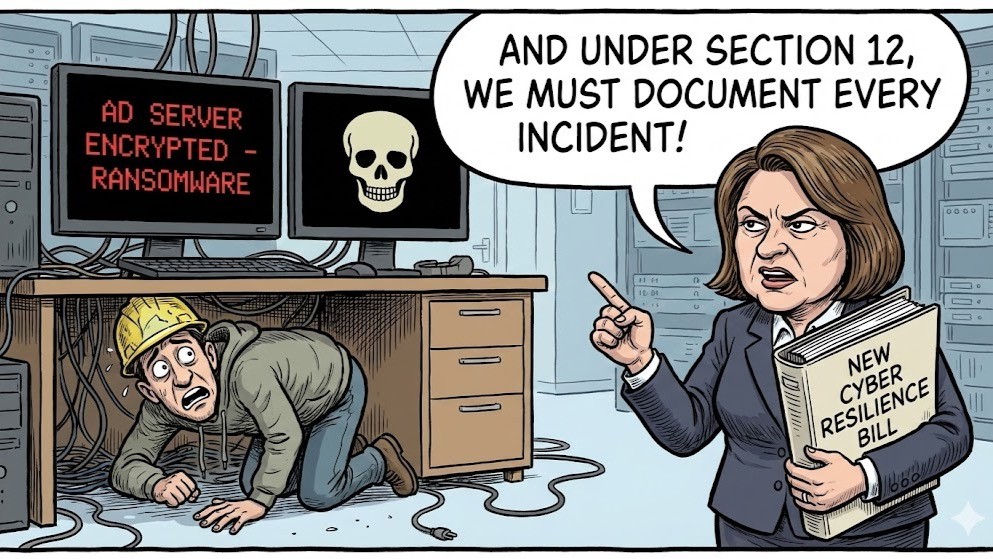
In every organisation, there is one environment so fundamental that its compromise can bring the entire business to a standstill. It isn’t finance, CRM, or even the customer-facing platforms we spend so much time securing. It’s Identity & Access Management (IAM)—and more specifically, the directory services that govern who can access what.
Recent ransomware attacks have made this brutally clear:
-> Threat actors no longer need to disrupt a system; they only need to compromise your identity layer.
Take down a single application and operations can usually continue. But take out Active Directory, and an entire organisation can be crippled within minutes.
Identity is the control plane of the business—its digital nervous system. When it fails, everything connected to it fails too.
Why IAM Is Now a Board-Level Resilience Issue
For years, IAM has been framed as an IT discipline or a security function. But the threat landscape, combined with increasing regulatory focus, is elevating identity to the heart of business resilience.
The forthcoming UK Resilience Bill is accelerating this shift. It places greater emphasis on preparedness, operational continuity and the ability to withstand shocks—whether cyber, physical, or operational.
But here’s the challenge:
Compliance alone won’t keep a business running. And resilience cannot come at the expense of agility, customer experience, or profitability.
The organisations that get this right adopt a balanced approach—strengthening the core without slowing down the business.
The New Reality: Identity Is Your Largest Attack Surface and Your Greatest Dependency
Attackers know this.
They don’t need to target your most sensitive system—they only need to:
- Compromise privileged accounts
- Disrupt authentication
- Corrupt domain controllers
- Disable recovery processes
Once identity goes down, everything else follows:
- Users can’t log in
- Applications can’t authenticate
- Cloud services fail
- Operational technology stops
- Critical business processes grind to a halt
In many of the major ransomware incidents we’ve analysed, identity compromise wasn’t a side effect—it was the primary objective.
Resilience Demands a New Approach to Identity Security
At Burning Tree, we’ve taken a targeted yet holistic approach to IAM resilience—particularly around Active Directory, which remains the most critical dependency in most enterprises.
Our framework prioritises:
1. Visibility & Clean-Up
You can’t secure what you can’t see. Organisations often underestimate dormant accounts, legacy permissions, and hidden vulnerabilities.
2. Governance & Hardening
Locking down change paths, reducing attack surfaces, and enforcing least privilege.
3. Continuous Monitoring
Real-time detection of unauthorised changes—because every AD breach begins with one.
4. Protecting High-Value Accounts with PAM
Privileged access is the crown jewels. We ensure it is controlled, audited, and recoverable.
5. AD Recovery Capabilities
Most organisations believe they can rebuild AD. Very few actually can. Tested, reliable recovery is essential.
6. Skills, Training & Culture
Identity resilience isn’t only a technical capability—it requires operational readiness.
7. Tabletop Exercises & Recovery Testing
Because resilience is not a policy. It’s a practice.
(These are reflected in the diagram below—our proven pathway to strengthening IAM resilience.)
Resilience Is Not a Project. It’s a Business Imperative.
Identity resilience is no longer simply about securing authentication—it’s about keeping the business running.
Boards are now asking:
- Can we maintain operations if IAM is compromised?
- How long could we function without AD or Azure AD?
- Do we have a tested identity recovery capability?
- Is our identity strategy aligned with new resilience expectations?
These are not technical questions. They are operational, financial, and strategic—because downtime is no longer measured in hours, but in revenue, reputation, and regulatory exposure.
A Resilient Future Starts with Identity
As the UK Resilience Bill approaches and the threat landscape evolves, organisations must rethink their priorities. Resilience is not about doing everything—it’s about doing the critical things well.
Identity is one of those critical things.
At Burning Tree, we help organisations secure and strengthen the systems that hold their business together. IAM resilience isn’t just a component of security—it’s the backbone of continuity, trust, and long-term performance.
If you’re reviewing your resilience posture or preparing for upcoming regulatory expectations, now is the time to evaluate how robust your identity environment truly is.
Because in today’s world, your business is only as resilient as your identity.